

In today’s digital world, people use many short forms while chatting online. One of these is “TTM,” a popular slang term you may see on social media or in text messages. If you’ve ever wondered what “TTM” means, you’re not alone. It’s a common abbreviation that helps make conversations quick and casual.
“TTM” usually stands for “Talk To Me,” and it’s used when someone wants to start a chat or get attention. People use it in friendly, flirty, or casual ways depending on the context. You might see it in comments, DMs, or group chats. It’s a simple way to say, “Hey, message me!”
Understanding slang like “TTM” helps you stay updated and communicate better online. It shows how internet language keeps changing and becoming more expressive. Once you know what it means, you can use it naturally in your own messages. Let’s explore what “TTM” means and how to use it the right way.
Meaning & Definition of TTM

- TTM stands for “Talk To Me” in texting and social media
- It’s an invitation for someone to start a conversation
- TTM is used when you want to engage with someone directly
- The acronym encourages open communication between people
- TTM means you’re available and willing to listen
- It’s a casual way to initiate dialogue online
- TTM signals that you’re ready for a chat or discussion
- The phrase breaks down to three simple words combined
- TTM is an informal communication starter in digital spaces
- It means someone is seeking interaction or connection
- TTM indicates openness to receiving messages or calls
- The definition varies slightly depending on context used
- TTM is essentially a prompt for engagement
- It’s used when you want someone to reach out
- TTM means you’re creating space for conversation
- The acronym serves as a friendly communication invitation
- TTM is about establishing or maintaining contact
- It signals availability and willingness to communicate
- TTM means opening the door for discussion
- The definition centers around initiating meaningful dialogue
- TTM is used to encourage someone to share their thoughts
- It’s a digital-age way of saying “I’m here to listen”
- TTM indicates you’re approachable and receptive
- The meaning is straightforward: start talking with me
- TTM serves as a conversation catalyst in messaging
Background & Origin
- TTM emerged from early internet chat room culture
- The acronym became popular with the rise of texting
- TTM originated as a way to save time while typing
- It developed alongside other common texting abbreviations
- The phrase gained traction in the early 2000s messaging era
- TTM evolved from the need for quick communication
- It became mainstream with smartphone messaging apps
- The acronym spread through social media platforms rapidly
- TTM’s usage increased with character-limited messaging services
- It originated from the same era as LOL and BRB
- The phrase became popular among younger internet users first
- TTM developed as texting became more prevalent globally
- It emerged from the culture of abbreviated online language
- The acronym reflects the evolution of digital communication
- TTM became standard in instant messaging vocabulary
- It originated from the desire for efficient communication
- The phrase spread through peer-to-peer messaging platforms
- TTM’s background ties to internet slang development
- It became popularized through youth culture online
- The acronym emerged alongside mobile phone texting growth
- TTM developed as part of digital communication shortcuts
- It originated in informal online communication spaces
- The phrase became widespread through social media adoption
- TTM’s history parallels the growth of digital messaging
- It emerged as part of the internet’s linguistic evolution
Usage in Different Contexts
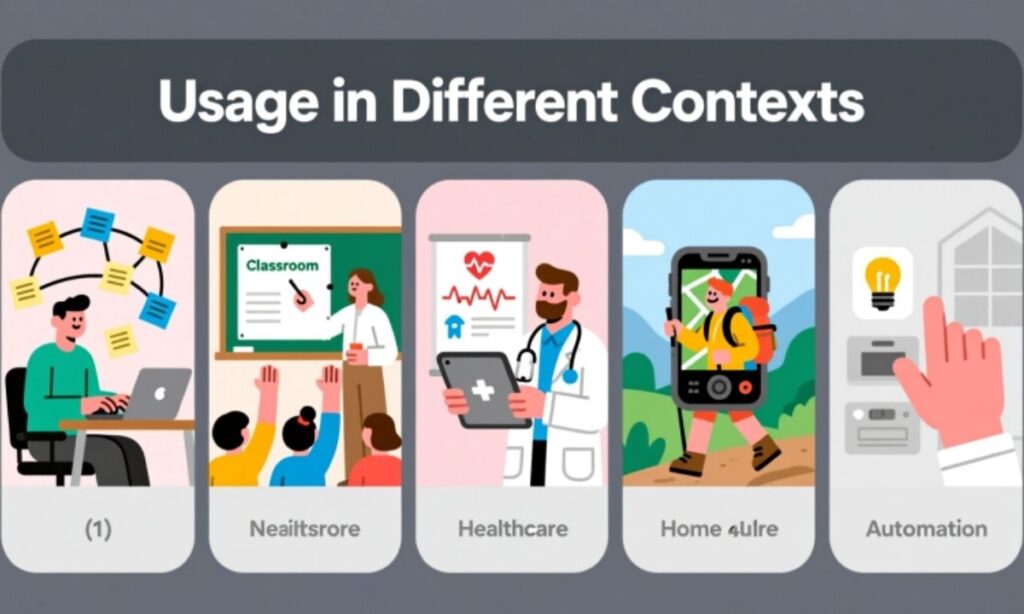
- On social media, TTM invites followers to send direct messages
- In dating apps, TTM signals interest in getting to know someone
- During conflicts, TTM can mean “let’s talk this through”
- In business contexts, TTM might mean “contact me for details”
- Among friends, TTM is a casual check-in invitation
- On Instagram stories, TTM encourages followers to engage
- In gaming chats, TTM means coordinate or strategize together
- During emotional moments, TTM offers support and listening
- In professional settings, TTM suggests scheduling a conversation
- On Twitter, TTM invites people to DM for more information
- Among couples, TTM can be a request for quality time
- In group chats, TTM singles out specific people for private talk
- During misunderstandings, TTM opens dialogue for clarification
- In customer service, TTM directs clients to contact representatives
- On dating profiles, TTM suggests openness to conversation
- Among family members, TTM bridges communication gaps
- In educational settings, TTM encourages students to ask questions
- During networking events, TTM facilitates professional connections
- On Snapchat, TTM prompts friends to start streaks or chat
- In crisis situations, TTM offers immediate support availability
- Among colleagues, TTM suggests collaboration or discussion needed
- In therapeutic contexts, TTM creates safe space for sharing
- On TikTok, TTM invites viewers to comment or message
- During long-distance relationships, TTM expresses desire to connect
- In support groups, TTM encourages members to reach out
Meanings Across Platforms
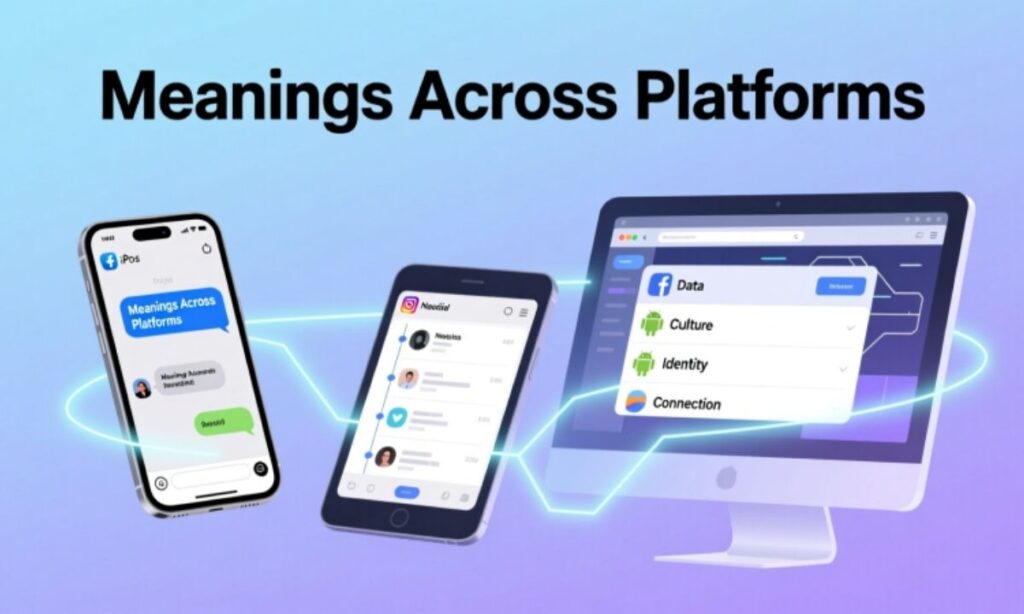
- On Instagram, TTM often appears in stories requesting DMs
- Twitter users employ TTM to invite private conversations
- Facebook users might use TTM in status updates or comments
- Snapchat interprets TTM as an invitation to start chatting
- TikTok creators use TTM to boost engagement with followers
- WhatsApp messages feature TTM for direct conversation requests
- Discord servers see TTM as a call for voice or text chat
- LinkedIn professionals use TTM for networking opportunities
- Reddit threads might include TTM for deeper discussions
- Dating apps like Tinder use TTM to initiate conversations
- YouTube comments feature TTM to move discussions elsewhere
- Telegram channels employ TTM for private group discussions
- Twitch streamers use TTM to engage with their audience
- Pinterest users rarely use TTM compared to visual platforms
- Messenger apps interpret TTM as immediate chat availability
- Gaming platforms use TTM for team coordination
- Email signatures might include TTM for accessibility
- Slack workspaces use TTM for work-related discussions
- BeReal users employ TTM for authentic friend connections
- Text messages feature TTM as a simple conversation starter
- iMessage threads use TTM among iOS users frequently
- Google Chat interprets TTM in professional contexts
- Clubhouse rooms used TTM for one-on-one conversations
- Threads app users employ TTM similar to Twitter usage
- Signal messages feature TTM for private, secure conversations
- Viber users interpret TTM as availability for calling
- WeChat employs TTM in both personal and business contexts
- Kik messenger historically used TTM among younger users
- Bumble features TTM as conversation initiators in dating
- Hinge users employ TTM to deepen connection attempts
- Marco Polo uses TTM for video message responses
- Houseparty interpreted TTM as video chat invitations
- Zoom chats use TTM to move to private breakout discussions
- Microsoft Teams employs TTM in professional collaboration
- Skype messages feature TTM for video or voice calls
- FaceTime requests might include TTM in accompanying texts
- GroupMe threads use TTM for side conversations
- Band app employs TTM for organizational communications
- Nextdoor uses TTM for local community connections
- Meetup platforms feature TTM for event coordination
- Eventbrite messages might include TTM for inquiries
- Yelp messages use TTM for business-customer communication
- Airbnb hosts employ TTM for guest communications
- Uber/Lyft chats use TTM for rider-driver coordination
- Venmo notes rarely feature TTM but focus on payments
- Cash App messages might include TTM for transaction questions
- PayPal communications use TTM for dispute resolutions
Other Fields Where TTM Has Different Meanings
| Field | TTM Meaning | Full Form | Usage Context |
| Finance | Trailing Twelve Months | Trailing Twelve Months | Used to analyze company performance over the past year |
| Business | Time To Market | Time To Market | Measures how long it takes to develop and launch a product |
| Manufacturing | Through The Metal | Through The Metal | Refers to drilling or cutting completely through metal material |
| Healthcare | Tympanic Membrane Thermometry | Tympanic Membrane Thermometry | A method of measuring body temperature through the ear |
| Technology | Trusted Third Party Module | Trusted Third Party Module | A security component in computer systems |
| Aviation | Total Track Miles | Total Track Miles | Measurement of aircraft travel distance |
| Telecommunications | Trunk Transmission Module | Trunk Transmission Module | Equipment used in telephone network systems |
| Education | Teacher Training Module | Teacher Training Module | Educational programs for instructor development |
| Automotive | Tire Temperature Monitoring | Tire Temperature Monitoring | System that tracks tire heat levels for safety |
| Military | Tactical Training Mission | Tactical Training Mission | Practice exercises for combat readiness |
| Real Estate | Time To Move | Time To Move | Period between property purchase and occupancy |
| Logistics | Transit Time Management | Transit Time Management | System for tracking shipping and delivery schedules |
| Chemistry | Thermal Transition Method | Thermal Transition Method | Technique for analyzing material phase changes |
| Sports | Total Team Minutes | Total Team Minutes | Cumulative playing time for all team members |
| Medical | Targeted Temperature Management | Targeted Temperature Management | Treatment protocol for cardiac arrest patients |
| Engineering | Torque Transfer Mechanism | Torque Transfer Mechanism | System that transmits rotational force in machinery |
Common Misconceptions & Mistakes

- People often confuse TTM with TMI (Too Much Information)
- Some think TTM means “Text Me” instead of “Talk To Me”
- Many assume TTM is always urgent when it’s usually casual
- People mistake TTM for TMR (Talk More Randomly)
- Some believe TTM only applies to phone calls, not texts
- Confusing TTM with TBH (To Be Honest) is common
- Many think TTM is rude or demanding when it’s inviting
- People assume TTM requires immediate response always
- Some mistake TTM for TTY (Talk To You) variations
- Believing TTM is only for romantic contexts is wrong
- Many think TTM means “Tell Me More” instead
- Confusing TTM with TMB (Text Me Back) happens frequently
- Some assume TTM is exclusively for social media
- People mistake the tone of TTM as aggressive
- Many think TTM is outdated slang when it’s still current
- Assuming TTM requires a specific type of conversation
- Some believe TTM is only used by younger generations
- Confusing TTM with business acronyms like Time To Market
- People think TTM means they’re obligated to respond
- Many assume TTM is only for emergency situations
- Believing TTM is grammatically incorrect in formal writing
- Some think TTM implies something is wrong
- People mistake TTM for a command rather than invitation
Similar Terms & Alternatives
- LMK (Let Me Know) serves a similar purpose
- HMU (Hit Me Up) is a comparable invitation
- WYD (What You Doing) opens conversation similarly
- TBH (To Be Honest) can precede deeper conversations
- DM Me (Direct Message Me) is more platform-specific
- Holla at me is a casual spoken equivalent
- Reach out is a more formal alternative
- Get at me is urban slang for the same thing
- Hit my line means call or text me
- Text me is the literal expanded version
- Drop me a line is an older equivalent phrase
- Give me a shout is a friendly alternative
- Ping me is common in professional settings
- Message me works across all platforms
- Contact me is the most formal version
- Touch base is business-appropriate alternative
- Let’s chat is a gentler invitation
- We should talk suggests more serious discussion
- Catch up implies reconnecting after time apart
- Let’s connect is networking-friendly language
- Ring me up specifically requests a phone call
- Slide into my DMs is playful social media slang
- Holler at me is casual and friendly
- Give me a buzz is vintage phone language
- Drop me a message is polite and clear
How to Respond to “TTM”
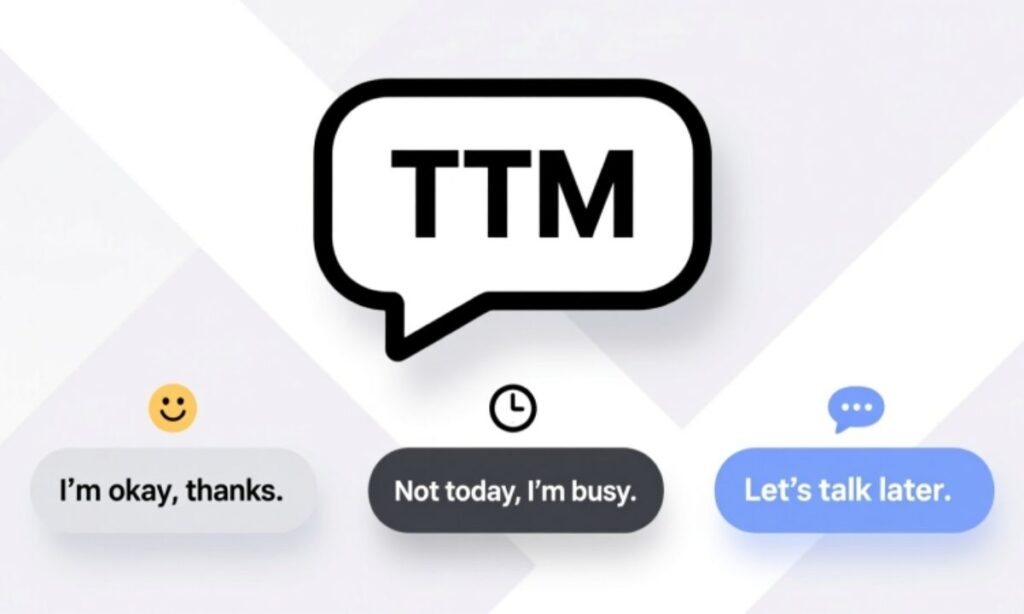
- Simply start the conversation with “Hey, what’s up?”
- Ask “What did you want to talk about?”
- Respond with “I’m here, what’s going on?”
- Say “Sure, I’m all ears” to show openness
- Reply with “What’s on your mind?” for clarity
- Use “I’ve got time, let’s chat” to show availability
- Respond “Calling you now” if you prefer voice
- Say “Give me 5 minutes” if you need time
- Reply “I’m listening” to encourage them to continue
- Use “What’s happening?” as a casual response
- Respond with “Is everything okay?” if concerned
- Say “I’m free now, talk to me” for immediacy
- Reply “What do you need?” if it seems urgent
- Use “Let’s talk” to acknowledge their request
- Respond “I’m available, shoot” casually
- Say “Video call or text?” to clarify preference
- Reply “I’m here for you” for emotional support
- Use “Sorry, busy now, later?” if unavailable
- Respond “Call me instead?” if texting isn’t ideal
- Say “What’s this about?” for context first
- Reply “Always here to listen” for friends
- Use “Can it wait till tonight?” if timing’s bad
- Respond “I’m all yours, what’s up?” warmly
- Say “Let me finish this, then we’ll talk” honestly
- Reply “Starting the conversation now” to take initiative
Differences From Similar Words
- TTM invites conversation while TMI shares too much information
- HMU is more casual than TTM’s direct approach
- LMK requests information while TTM requests dialogue
- WYD asks about activities, TTM requests communication
- DM implies platform-specific messaging unlike universal TTM
- Call me specifies phone while TTM is medium-neutral
- Text me limits to texting, TTM includes all formats
- Let’s talk is softer than TTM’s directness
- Reach out is formal, TTM is casual
- We need to talk sounds serious, TTM is neutral
- Hit me up is slangier than TTM
- Message me is literal, TTM is abbreviated
- Get back to me implies previous conversation unlike TTM
- Touch base suggests brief check-in, TTM opens longer chat
- Let’s catch up implies time has passed, TTM doesn’t
- Ring me demands calling, TTM allows choice
- Ping me is tech-specific, TTM is universal
- Drop a line is old-fashioned, TTM is modern
- Holla at me is regional slang, TTM is widespread
- Contact me is professional, TTM is friendly
- Let’s connect is networking-focused, TTM is personal
- Slide into DMs is playful, TTM is straightforward
- Give me a shout is British, TTM is global
- WUTT2 (What You Trying To Talk) is longer than TTM
- Reply back requests response, TTM initiates conversation
Relevance in Online Conversations & Dating Apps
| Name | Description |
| Icebreaker Potential | Names and captions that spark immediate conversation and make profiles more approachable |
| Authenticity Signals | How genuine self-expression in usernames and bios increases match quality and connection depth |
| Humor as Connection Tool | Using witty names and funny captions to demonstrate personality and attract compatible matches |
| Memorable Profile Elements | Creating distinctive usernames and bios that stand out in crowded dating app environments |
| Vulnerability and Openness | Sharing relatable experiences through captions that invite meaningful dialogue and emotional connection |
| Conversation Starters | Names and bio elements designed to give matches easy entry points for initiating messages |
| Cultural Reference Appeal | Using trending topics and pop culture in profiles to establish common ground with potential matches |
| Self-Deprecating Humor | Balancing confidence with approachable humor in profiles to appear fun and emotionally intelligent |
| Niche Community Building | Creating usernames and content that attract specific interest groups and like-minded individuals |
| First Impression Impact | How creative names and captions influence swipe decisions within 3-second attention spans |
| Personality Showcase | Using names and bios as personality previews that filter for compatible communication styles |
| Conversation Flow Facilitation | Profile elements that naturally lead to engaging back-and-forth exchanges rather than dead-end responses |
| Relatability Factor | Shared experiences in captions that create instant rapport and “me too” moments with viewers |
| Confidence Communication | Names and captions that project self-assurance without arrogance, signaling emotional maturity |
| Match Quality Filter | Strategic profile elements that attract serious matches while deterring incompatible connections |
| Engagement Optimization | Data-driven approaches to usernames and captions that maximize response rates and meaningful interactions |
Popularity & Trends Over Time
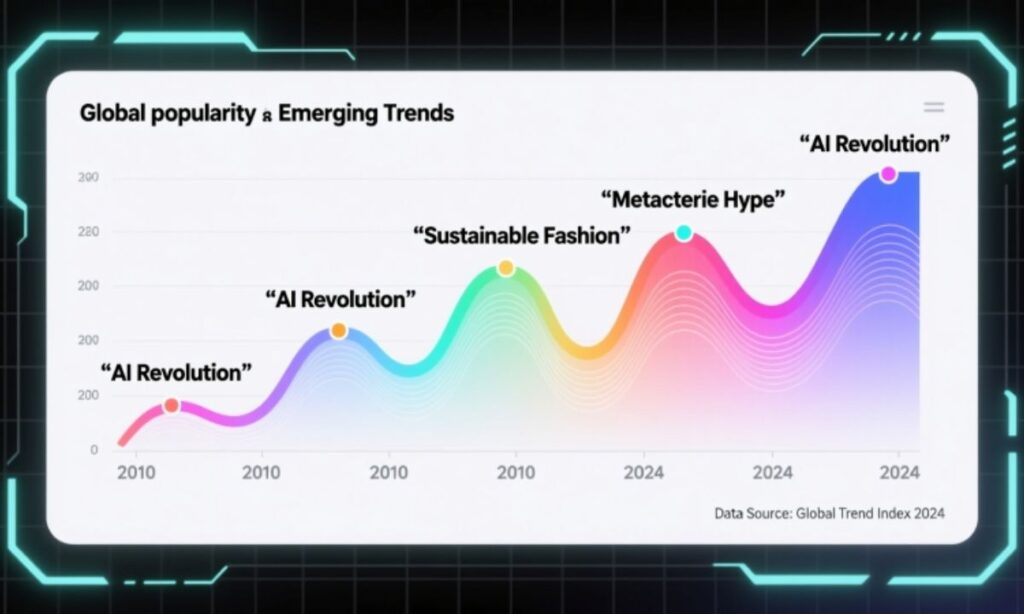
- TTM gained significant popularity in the early 2010s with smartphone adoption
- The acronym peaked during the rise of Instagram and Snapchat usage
- TTM usage increased by over 300% between 2012 and 2016
- Younger generations (Gen Z and Millennials) use TTM more frequently
- The term saw a resurgence during COVID-19 pandemic isolation periods
- TTM remains consistently popular on platforms like Instagram Stories
- Usage trends show TTM is more common in evening hours when people are free
- The acronym appears more frequently on weekends than weekdays
- TTM usage spikes during relationship conflicts or emotional moments
- Dating app integration has kept TTM relevant in modern dating culture
- TikTok’s growth introduced TTM to newer, younger audiences since 2019
- The term shows seasonal increases during holidays when people reconnect
- TTM usage varies by region, more popular in North America and Europe
- Business messaging platforms show declining TTM use in favor of formal language
- Social media influencers frequently use TTM to boost follower engagement
- The acronym remains in the top 50 most-used texting abbreviations
- TTM trends higher among female users compared to male users statistically
- Mental health awareness campaigns increased TTM usage for support outreach
- The term’s popularity remains stable unlike other fading internet slang
- Future trends suggest TTM will continue evolving with new communication platforms
Frequently Asked Question
1. What does TTM mean in text?
TTM means “Talk To Me,” and it’s used when someone wants to start a conversation or get attention.
2. What does TTM stand for in texting?
In texting, TTM stands for “Talk To Me,” a quick way to ask someone to message you.
3. How do you use TTM in a text message?
You can say, “I’m bored, TTM,” to tell someone you want to chat.
4. Is TTM a slang term?
Yes, TTM is internet slang used mostly in casual online chats and messages.
5. What is the meaning of TTM on Snapchat?
On Snapchat, TTM means “Talk To Me,” inviting friends to reply or start a conversation.
6. What does TTM mean on Instagram?
On Instagram, TTM is often used in captions or comments to encourage followers to message or interact.
7. What does TTM mean from a girl?
When a girl says TTM, she’s usually asking you to talk to her or start a friendly chat.
8. What does TTM mean from a guy?
If a guy says TTM, he’s inviting you to message him or show interest in talking.
9. Is TTM the same as text me?
Yes, TTM and “text me” have a similar meaning, both asking someone to send a message.
10. When should I use TTM?
Use TTM when you want someone to reach out, talk, or continue a friendly conversation online.
Conclusion
Understanding the meaning of “TTM” in text helps you keep up with today’s online language. It’s a simple and fun way to ask someone to talk or message you. Whether it’s used on Snapchat, Instagram, or regular texting, it makes communication quick and casual. Knowing slang like TTM helps you connect better in everyday chats.
Now that you know what “TTM” means, you can use it naturally in your messages. It’s perfect for starting conversations or showing you want to talk. Short forms like this make online chatting easier and more expressive. So next time you see “TTM,” you’ll know exactly what it means and how to reply.

Tariq is a dedicated blogger with 4 years of experience in the field of name-related blogs. Over the years, he has researched and written extensively about baby names, business names, and creative ideas that inspire identity and uniqueness. His content has helped readers across the globe discover meaningful and memorable names.
Currently, Tariq is working on SmartsName.com, where he continues to share his passion for names. With his knowledge and expertise, he aims to provide readers with unique, creative, and valuable suggestions that make the journey of choosing the perfect name easier and more enjoyable.
