

Chess is more than just a game; it’s a beautiful dance of strategy, emotion, and intellect. Each piece tells a story, and knowing the chess pieces names is the first step to understanding this timeless battlefield. From the humble pawn to the majestic queen, every piece carries its own personality and role, shaping the way the game unfolds.
Learning the chess pieces names isn’t just about memorization—it’s about connecting with the game on a deeper level. When you recognize each piece and its unique movements, you start to feel the rhythm of chess, almost like a conversation between two minds. The names become more than labels; they become companions in your journey toward mastery.
Whether you’re a beginner dreaming of your first victory or a seasoned player aiming for elegance in every move, knowing the chess pieces names opens a world of possibility. You’ll understand the subtle beauty of sacrifice, the thrill of strategy, and the quiet power of patience. Chess isn’t just played—it’s felt, and the pieces names are the language of that feeling.
The King: Why This Chess Piece Names Carry Power and Love
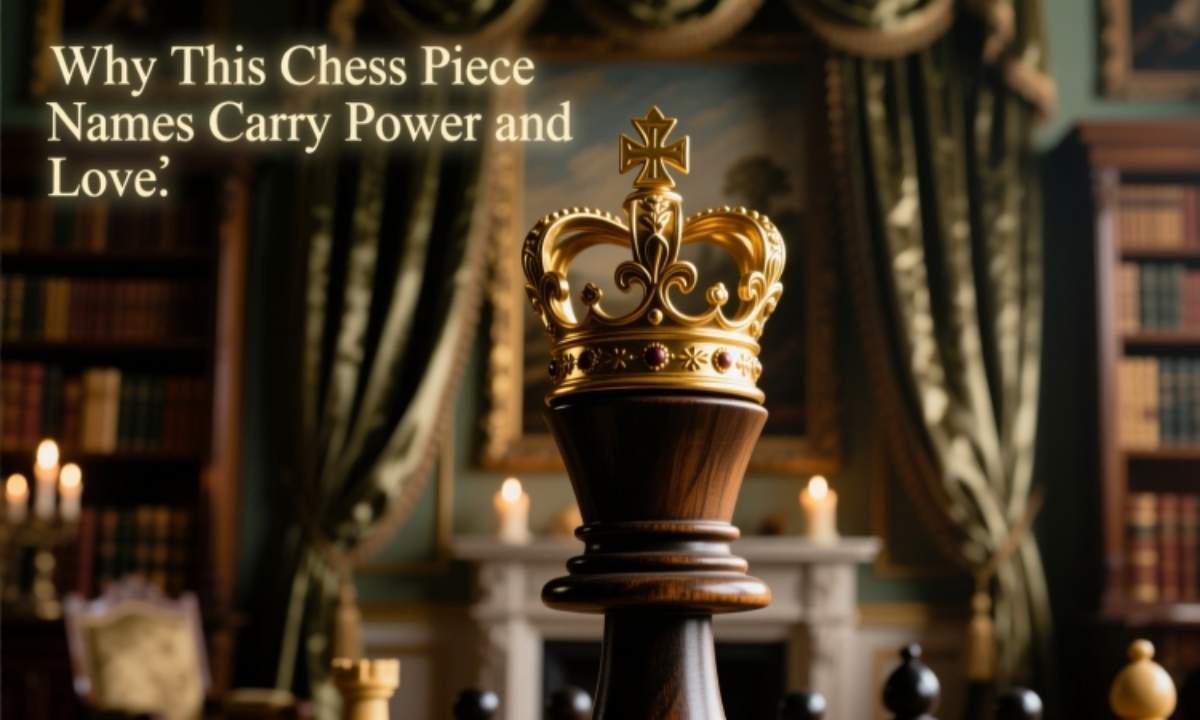
The King stands as the most important piece in chess, embodying leadership, vulnerability, and the ultimate objective that defines victory or defeat in every game played.
- His Majesty – Traditional formal title 👑
- The Sovereign – Supreme ruler designation 🏰
- Rex – Latin origin meaning king 📜
- Shah – Persian origin, meaning king ⚔️
- Roi – French for king 🇫🇷
- König – German for king 🇩🇪
- Rey – Spanish for king 🇪🇸
- The Crown – Symbol of royalty 👑
- Lord of the Board – Poetic descriptor 🎭
- The Protected One – Strategic importance 🛡️
- Central Authority – Position significance 📍
- The Objective – Game’s ultimate goal 🎯
- Royal Leader – Leadership role 👔
- The Vulnerable Monarch – Weakness aspect 💔
- Castle Dweller – Starting position 🏰
- The Crowned Head – Symbolic top piece 👑
- Checkmate Target – Endgame focus 🎲
- The One Step Wonder – Movement limitation 👣
- Protected Majesty – Defensive needs 🛡️
- The Heart of Strategy – Game centrality ❤️
- Royal Patriarch – Father figure role 👴
- The Slow Mover – Movement characteristic 🐌
- Kingdom Ruler – Domain controller 🗺️
- The Precious Piece – Value importance 💎
- Endgame Warrior – Late game strength ⚔️
- The Castling Partner – Special move participant 🏰
- Center of Attention – Focus of play 👀
- The Ultimate Prize – Victory condition 🏆
- Weak but Worthy – Paradox of power 🎭
- The Immortal Leader – Game significance ♾️
The Queen: Exploring Chess Pieces Names and Their Majesty
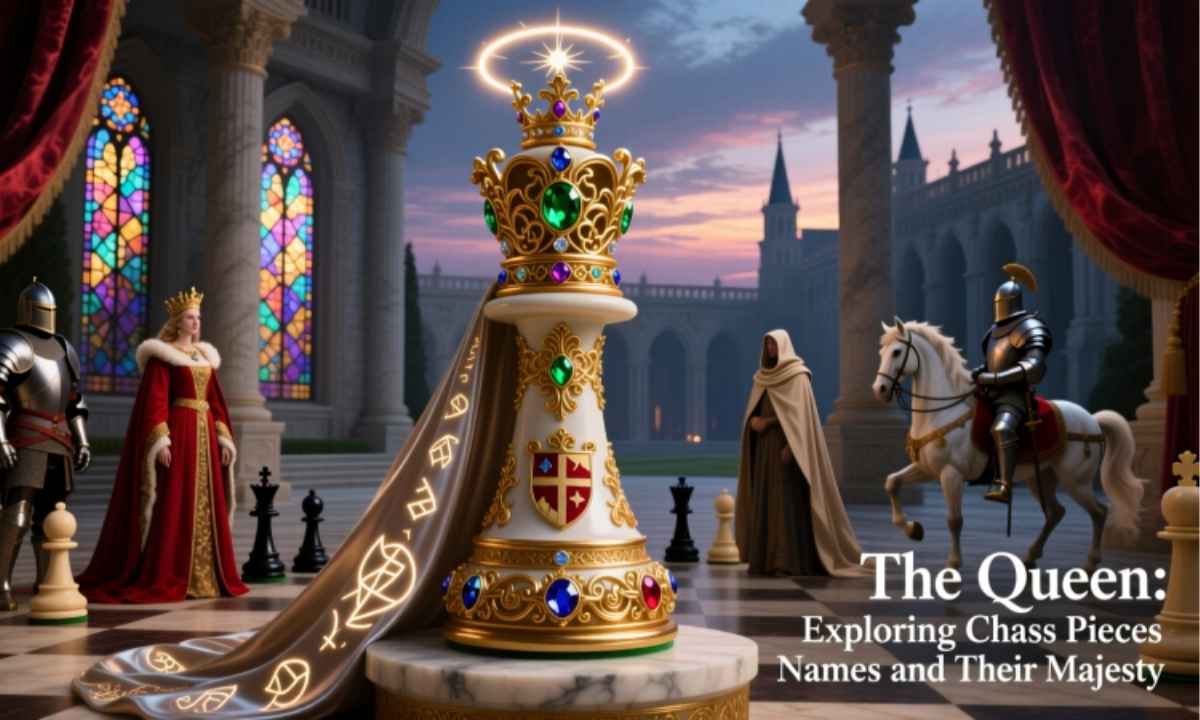
The Queen reigns as the most powerful piece on the chessboard, combining the movements of multiple pieces and representing supreme strategic flexibility and devastating offensive potential.
- Her Majesty – Royal female title 👸
- The Powerhouse – Strongest piece 💪
- Regina – Latin for queen 📜
- Dame – French alternative name 🇫🇷
- Königin – German for queen 🇩🇪
- Reina – Spanish for queen 🇪🇸
- The Minister – Historical alternative 📋
- Ferz – Ancient Persian origin ⚔️
- The Amazon – Warrior reference 🗡️
- Lady of the Board – Elegant descriptor 💃
- The Sweeper – Board control ability 🧹
- Royal Consort – King’s partner 💑
- The Game Changer – Impact significance 🎲
- Supreme Commander – Military power ⚔️
- The Dominator – Control capability 👊
- Multi-directional Monarch – Movement variety ↔️
- The Devastating Force – Attack power 💥
- Royal Warrior – Combat prowess ⚔️
- The Strategic Sword – Tactical weapon 🗡️
- Crown Jewel – Most valuable piece 💎
- The Long-Range Sniper – Distance capability 🎯
- Board Empress – Domain control 🌍
- The Unstoppable – Power descriptor 🚀
- Royal Assassin – Attack capability 🗡️
- The Victory Maker – Winning importance 🏆
- Diagonal and Straight – Movement description ↔️
- The Omnipotent One – Power reference ✨
- Lady Lightning – Speed and power ⚡
- The Checkmate Queen – Finishing ability ✓
- Supreme Strategist – Tactical importance 🧠
The Bishop: Soft Moves and Emotional Chess Pieces Names
The Bishop glides diagonally across the board with grace and precision, representing spiritual guidance and the elegant geometry of diagonal warfare in chess strategy.
- The Diagonal Dancer – Movement style 💃
- Alfil – Arabic origin meaning elephant 🐘
- The Clergyman – Religious connection ⛪
- Fou – French for fool or jester 🤡
- Läufer – German for runner 🏃
- The Runner – Alternative name 🏃
- Elephant – Historical origin 🐘
- The Angled Attacker – Attack pattern ↗️
- Spiritual Guide – Religious symbolism 🙏
- The Color-Bound Piece – Square limitation ⬛
- Diagonal Warrior – Movement warrior ⚔️
- The Long-Range Scout – Distance capability 🔭
- Cross Bearer – Religious symbol ✝️
- The Slanted Striker – Attack angle ↗️
- Geometric Guardian – Pattern protector 📐
- The Diagonal Defender – Defense style 🛡️
- Faith Piece – Spiritual representation 🙏
- The Angle Master – Diagonal expertise ↗️
- Color Square Specialist – One color focus ⬜
- The Silent Slider – Smooth movement 🎿
- Diagonal Dominator – Control style 👊
- The Corner Lover – Starting position 📍
- Sacred Strategist – Religious tactics 📖
- The X-Marker – Diagonal pattern ❌
- Light or Dark Brother – Color pair ⚫⚪
- The Diagonal Highway – Path creator 🛣️
- Slant Warrior – Angled fighter ⚔️
- The Geometric Genius – Pattern intelligence 🧠
- Cross-Fire Piece – Diagonal threat ↗️
- The Faithful One – Loyalty symbol 💙
- Diagonal Dynasty – Pattern power 👑
The Knight: Romantic Tales Behind Chess Pieces Names
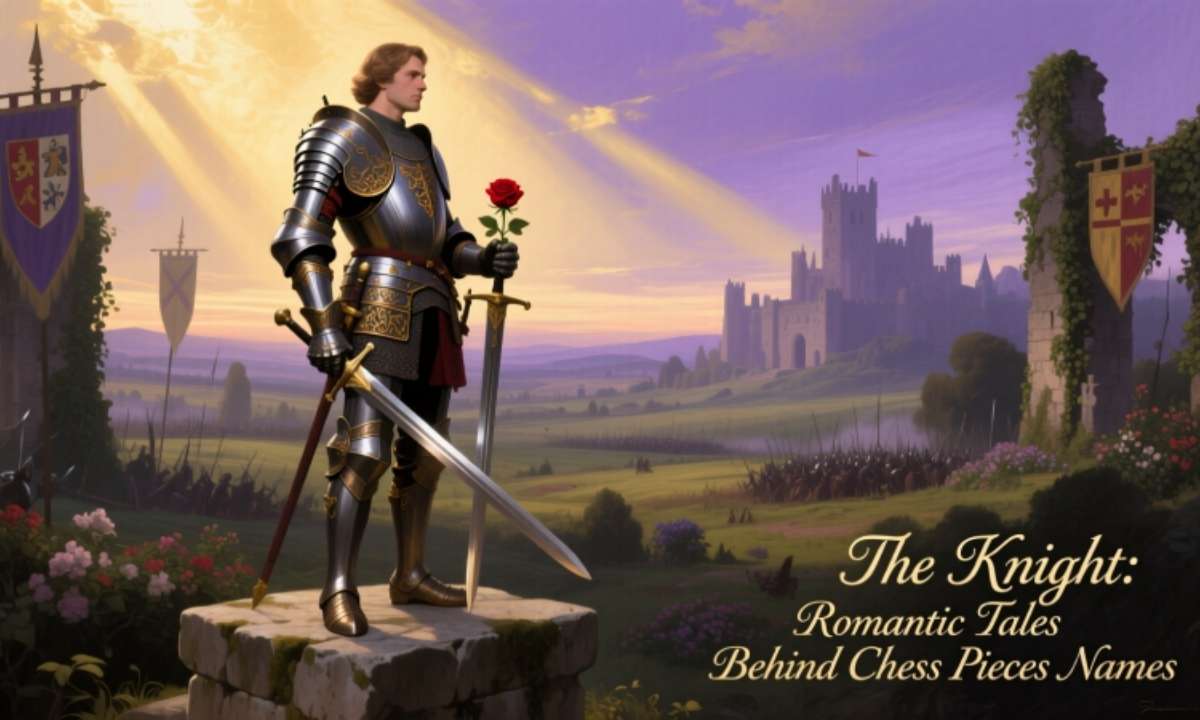
The Knight leaps across the board in its distinctive L-shaped pattern, embodying chivalry, courage, and the unpredictable nature of cavalry charges in medieval warfare.
- The Leaper – Unique jumping ability 🦘
- Caballero – Spanish for knight 🇪🇸
- Springer – German for jumper 🇩🇪
- Cavalier – French term 🇫🇷
- The Horse – Animal representation 🐴
- Noble Steed – Mounted warrior 🏇
- The L-Shaped Warrior – Movement pattern ⚔️
- Jumping Jack – Leap ability 🤸
- The Tricky Piece – Deceptive moves 🎭
- Cavalry Commander – Military role 🐎
- The Fork Master – Double attack specialist 🍴
- Noble Warrior – Chivalric nature 🗡️
- The Unexpected – Surprising moves 😲
- Corner Jumper – Starting position leap 📍
- The Eight-Square Attacker – Attack range 8️⃣
- Horseback Hero – Mounted courage 🦸
- The Obstacle Hopper – Jump over pieces 🦘
- Chivalrous Champion – Honor code 🛡️
- The Unpredictable – Irregular pattern 🎲
- L-Pattern Prince – Movement royalty 👑
- The Center Dominator – Central power 📍
- Medieval Charger – Historical cavalry ⚔️
- The Forking Fiend – Attack specialty 🍴
- Noble Jumper – Aristocratic leaper 🎩
- The Color Changer – Square color switch ⚫⚪
- Mounted Guardian – Defensive role 🛡️
- The Tactical Trickster – Strategic deception 🎭
- Armored Acrobat – Protected leaper 🤸
- The Eight-Way Attacker – Direction variety ↗️
- Brave Charger – Courageous advance 💪
The Rook: Strength and Security in Chess Pieces Names
The Rook towers as a fortress of strength, moving in straight lines with unwavering power, representing the castle walls and military might in chess warfare.
- The Castle – Common alternative name 🏰
- Torre – Spanish for tower 🇪🇸
- Turm – German for tower 🇩🇪
- The Tower – Fortress representation 🗼
- Rukh – Persian origin (chariot) 🏛️
- The Chariot – Historical origin 🏇
- Straight Shooter – Linear movement ➡️
- The Fortress – Defensive strength 🏰
- Corner Guardian – Starting position 📍
- The Linear Powerhouse – Straight line strength 💪
- Horizontal Ruler – Rank control ↔️
- Vertical Victor – File domination ⬆️
- The Castling Partner – Special move 🏰
- Straight-Line Striker – Attack pattern ➡️
- The Back-Rank Boss – Eighth rank power 8️⃣
- File Dominator – Vertical control ⬆️
- Rank Ruler – Horizontal power ↔️
- The Heavy Piece – Major piece status 🏋️
- Endgame Emperor – Late game strength 👑
- The Straight Talker – Direct movement 💬
- Fortress Fighter – Defensive warrior 🛡️
- The Open File Lover – Position preference 📂
- Seventh Heaven – Seventh rank power 7️⃣
- The Connected Tower – Doubled rooks 🏰🏰
- Back-Rank Protector – King’s guardian 🛡️
- The Battery Builder – Rook alignment ⚡
- Perpendicular Power – Cross movement ➕
- The Edge Dweller – Board side preference 📍
- Straight-Line Sentinel – Defensive watch 👁️
- The Unstoppable Train – Powerful advance 🚂
The Pawn: Humble but Brave Chess Pieces Names in Action
The Pawn represents the soul of chess, the humble foot soldier with dreams of promotion, embodying sacrifice, persistence, and the potential for transformation.
- The Foot Soldier – Infantry representation 🎖️
- Peón – Spanish for pawn 🇪🇸
- Bauer – German for farmer 🇩🇪
- Pion – French for pawn 🇫🇷
- The Infantry – Common soldier 🪖
- The Peasant – Humble origin 🧑🌾
- Forward Fighter – One-direction mover ⬆️
- The Potential Queen – Promotion dream 👸
- Diagonal Capturer – Attack pattern ↗️
- The Brave Little One – Courage despite size 💪
- En Passant Specialist – Special capture 🎯
- The Sacrificial Lamb – Tactical sacrifice 🐑
- Promotion Seeker – Eighth rank goal 🎯
- The Pawn Chain – Formation strength ⛓️
- Forward March – Movement direction ⬆️
- The Humble Hero – Underdog spirit 🦸
- Passed Pawn – Unstoppable advance 🚀
- The Blocker – Obstruction role 🚧
- Two-Step Starter – Opening move 👣
- The Expendable One – Sacrifice piece 💔
- Pawn Structure – Formation importance 🏗️
- The Soul of Chess – Philidor’s quote 💙
- Eighth Rank Dreamer – Promotion aspiration 🌟
- The Shield – King protection 🛡️
- Doubled Pawn – Weakened formation ⏸️
- The Isolated Island – Weak pawn 🏝️
- Backward Pawn – Structural weakness ⏪
- The Connected Soldier – Strong formation 🤝
- Central Pawn – Opening importance 📍
- The Transformer – Promotion magic ✨
How Chess Pieces Names Shape Your Game Strategy
Understanding chess pieces names and their characteristics fundamentally influences strategic thinking, opening preparation, tactical awareness, and endgame technique throughout every phase of play.
- King Safety First – Protection priority 🛡️
- Queen Power Play – Maximizing strength 💪
- Bishop Pair Advantage – Two bishop power ⚪⚫
- Knight Outpost – Strong square occupation 📍
- Rook Activity – Open file control 📂
- Pawn Structure – Foundation strategy 🏗️
- Center Control – Board dominance 🎯
- Piece Coordination – Harmony principle 🎵
- Development Speed – Opening tempo ⚡
- Material Balance – Piece value count ⚖️
- King in Center – Early game danger ⚠️
- Queen Early Development – Risky move 👸
- Bishop Fianchetto – Diagonal control ↗️
- Knight Before Bishop – Development order 🐴
- Rook Connection – Castling benefit 🏰
- Pawn Breaks – Structure disruption 💥
- Piece Sacrifice – Tactical exchange 🎲
- King Opposition – Endgame technique 👥
- Queen Dominance – Middlegame control 👑
- Bishop vs Knight – Endgame consideration 🤔
- Knight Fork – Tactical pattern 🍴
- Rook Lift – Vertical to horizontal 🏗️
- Pawn Majority – Endgame advantage ⬆️
- Piece Activity – Dynamic play 🎭
- King Activity – Endgame centralization 👑
- Queen Trade – Simplification strategy 🔄
- Bishop Color – Square control ⬛⬜
- Knight Range – Central positioning 📍
- Rook Seventh Rank – Powerful position 7️⃣
- Pawn Promotion – Ultimate goal 🎯
Choosing the Right Chess Pieces Names for Beginners
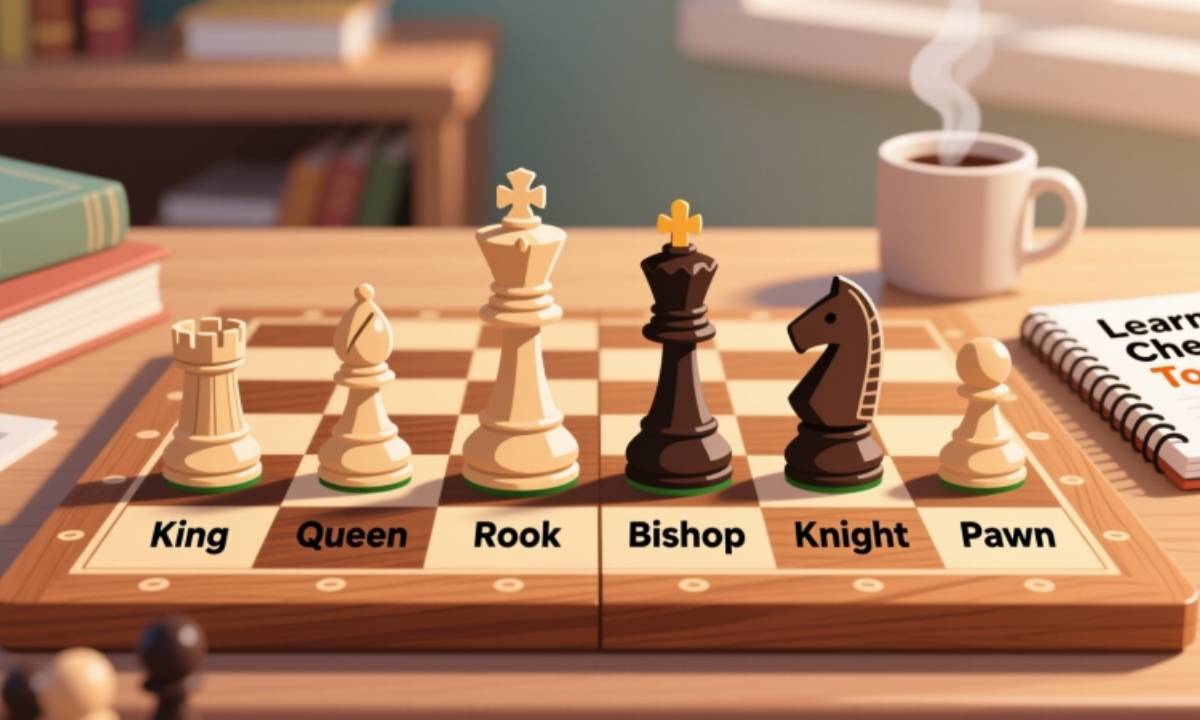
Starting your chess journey requires understanding the basic nomenclature, recognizing pieces by sight and function, and building confidence through consistent terminology that simplifies learning and accelerates improvement.
- Start with Standard Names – Use common terminology 📖
- King is the Boss – Remember importance 👑
- Queen is Strongest – Power recognition 💪
- Bishops Go Diagonal – Movement memory ↗️
- Knights Jump L-Shape – Pattern learning 🐴
- Rooks Move Straight – Linear understanding ➡️
- Pawns Go Forward – Direction learning ⬆️
- Use Visual Cues – Crown means King 👑
- Practice Piece Names – Repetition helps 🔁
- Learn Values First – Point system ⚖️
- Understand Movement – How pieces travel 🚶
- Recognize Symbols – Notation basics ♔♕
- Start with King Safety – Protection priority 🛡️
- Don’t Rush Queen Out – Development patience ⏰
- Knights First Developed – Opening principle 🐴
- Control the Center – Pawn placement 🎯
- Castle Early – King safety move 🏰
- Connect Your Rooks – Strategic goal 🔗
- Understand Pawn Chains – Structure basics ⛓️
- Learn Simple Checkmates – King and Queen ✓
- Practice Piece Coordination – Harmony 🎵
- Avoid Early Trades – Development focus 🔄
- Remember Piece Value – Trade awareness 💎
- Learn Basic Tactics – Forks and pins 🍴
- Study Endgame Basics – King activity 👑
- Use Descriptive Notation – Square naming 🔢
- Practice Against Computer – Skill building 🤖
- Join Chess Club – Community learning 👥
- Watch Tutorial Videos – Visual learning 📹
- Play Regularly – Consistency matters 🎲
- Review Your Games – Learn from mistakes 🔍
- Set Realistic Goals – Progress tracking 🎯
- Enjoy the Journey – Have fun ❤️
- Ask Questions – Seek clarification ❓
- Celebrate Victories – Build confidence 🎉
- Learn from Defeats – Growth mindset 📈
- Study Famous Games – Historical learning 📚
- Understand Openings – First moves matter 🎬
- Practice Tactics Daily – Puzzle solving 🧩
- Be Patient – Mastery takes time ⏳
Frequently Asked Questions
What are chess pieces names?
Chess pieces names refer to all the individual pieces in a chess game, like the king, queen, rook, bishop, knight, and pawn.
How many chess pieces names are there in total?
There are six primary chess pieces names in each set, with pawns being multiple, making a total of 16 pieces per player.
Why is it important to learn chess pieces names?
Knowing chess pieces names helps you understand the game’s strategy, movements, and the unique role each piece plays.
What is the most powerful chess piece name?
The queen is considered the most powerful chess piece name due to its versatile movements across the board.
Which chess piece name is considered the heart of the game?
The king holds this role, as protecting it is essential for winning, making the king a central chess piece name.
Can beginners easily memorize all chess pieces names?
Yes, beginners can memorize all chess pieces names with simple practice, stories, and emotional connections to each piece.
Are chess pieces names the same worldwide?
Yes, the standard chess pieces names are recognized internationally, though some regions may have local nicknames.
What chess piece name moves in an L-shape?
The knight is the chess piece name that moves in an L-shape, offering unique strategic advantages.
How do chess pieces names influence game strategy?
Each chess piece name has a distinct movement, and understanding them shapes your tactical and romantic approach to the game.
Is there a chess piece name that symbolizes sacrifice?
The pawn often symbolizes sacrifice, as it can be offered to gain position or protect more valuable chess pieces names.
Can knowing chess pieces names improve your chess skills?
Absolutely, understanding chess pieces names allows you to plan moves, predict opponents’ strategies, and play emotionally with confidence.
Are there fun facts related to chess pieces names?
Yes, each chess piece name has historical stories and romantic legends tied to its role and movements on the board.
conclusion
Understanding chess pieces names is more than memorizing their roles—it’s about connecting deeply with the game and feeling every move. Each piece, from the brave pawn to the majestic queen, carries its own story, teaching patience, strategy, and even moments of quiet romance on the board.
When you know all the chess pieces names, you unlock the beauty of chess. You start to see each game as a dance of intellect and emotion, where every piece has its moment to shine. Playing becomes a personal journey, filled with thoughtful moves and subtle victories that feel truly rewarding.
So, whether you are learning for the first time or refining your strategy, embracing the chess pieces names will make every match more meaningful. Let each piece inspire you, guide you, and remind you that chess is not just a game—it’s a story waiting to be told with every move.

Tariq is a dedicated blogger with 4 years of experience in the field of name-related blogs. Over the years, he has researched and written extensively about baby names, business names, and creative ideas that inspire identity and uniqueness. His content has helped readers across the globe discover meaningful and memorable names.
Currently, Tariq is working on SmartsName.com, where he continues to share his passion for names. With his knowledge and expertise, he aims to provide readers with unique, creative, and valuable suggestions that make the journey of choosing the perfect name easier and more enjoyable.
